

Foundational
Foundational principles, the therapeutic role of water, its physical properties, safety considerations, patient screening, and patient suitability, before a single technique is introduced.
You trained on land. But now want to move into water, that is the entire reason this certification exists.
Many clinicians recognize the potential of aquatic therapy but have had limited opportunities to receive structured, clinically focused training in how to effectively use the aquatic environment as part of rehabilitation. ATI helps bridge that gap.
Our clinician training provides the knowledge, practical skills and clinical framework needed to confidently incorporate aquatic therapy into patient care. From understanding the properties of water to assessment, treatment planning, exercise selection and progression, clinicians learn how to use the aquatic environment with purpose.
The goal is simple: give clinicians another valuable treatment option, and the confidence to know when, why and how to use it.
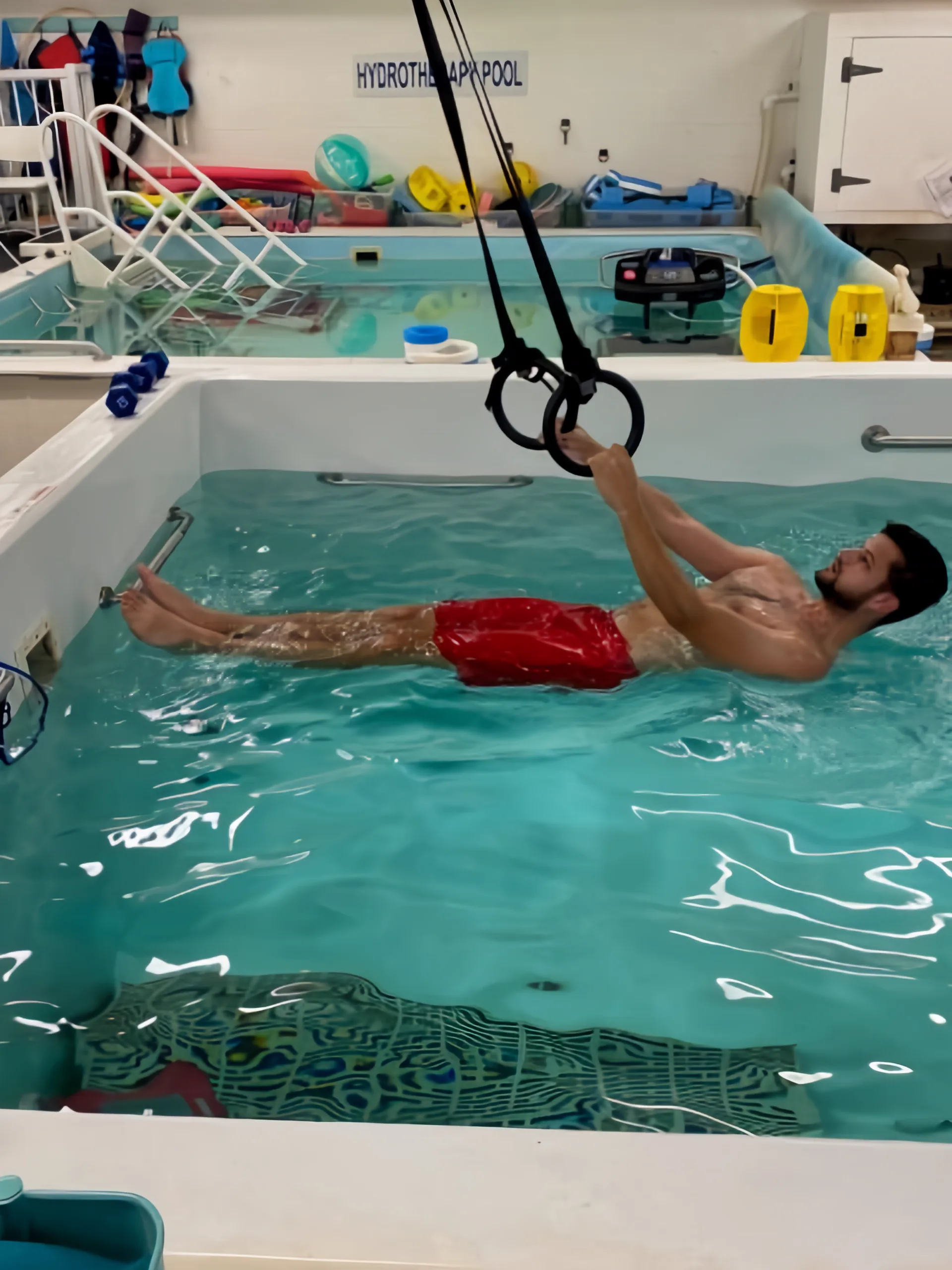
The patient moves with full support, building trust in the water before building anything else.
Support reduces, function increases, and the patient starts doing more of the work.
Movement becomes deliberate and precise, not just possible.
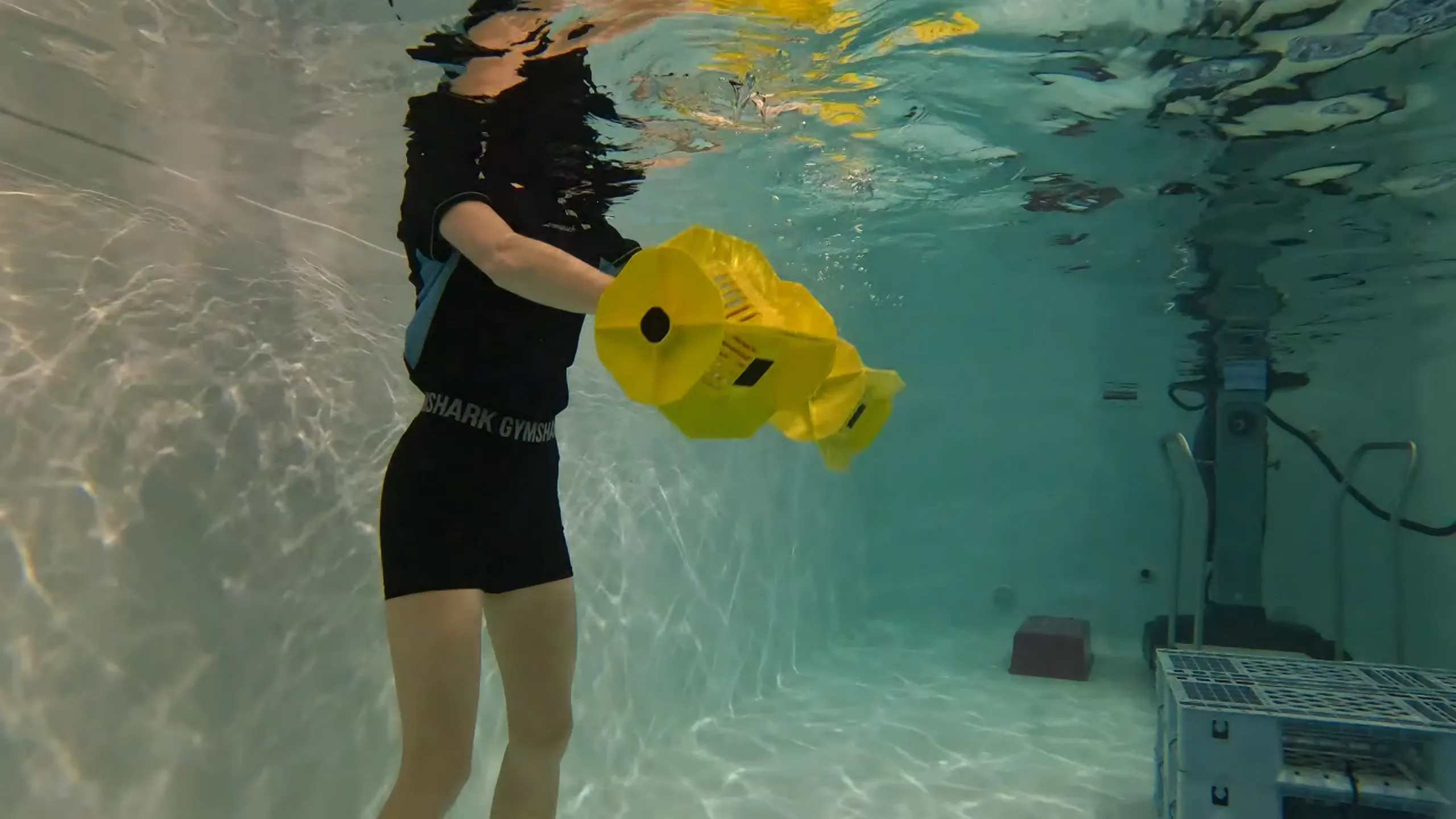
Water's resistance becomes the training tool itself, not an obstacle to work around.
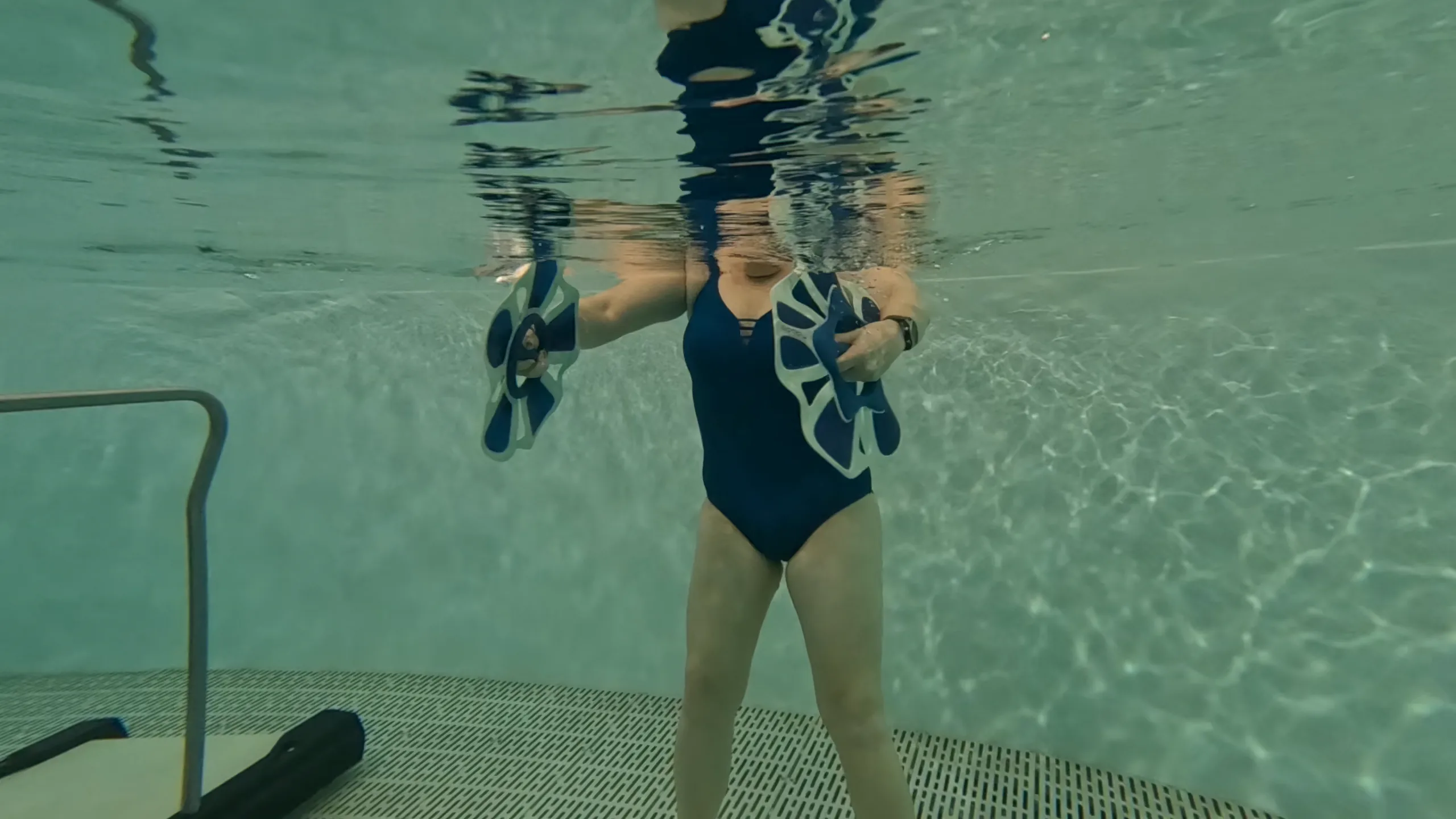
The patient moves through the water on their own, with no support, no assistance.
The final stage, carrying everything gained in water back into land-based function.
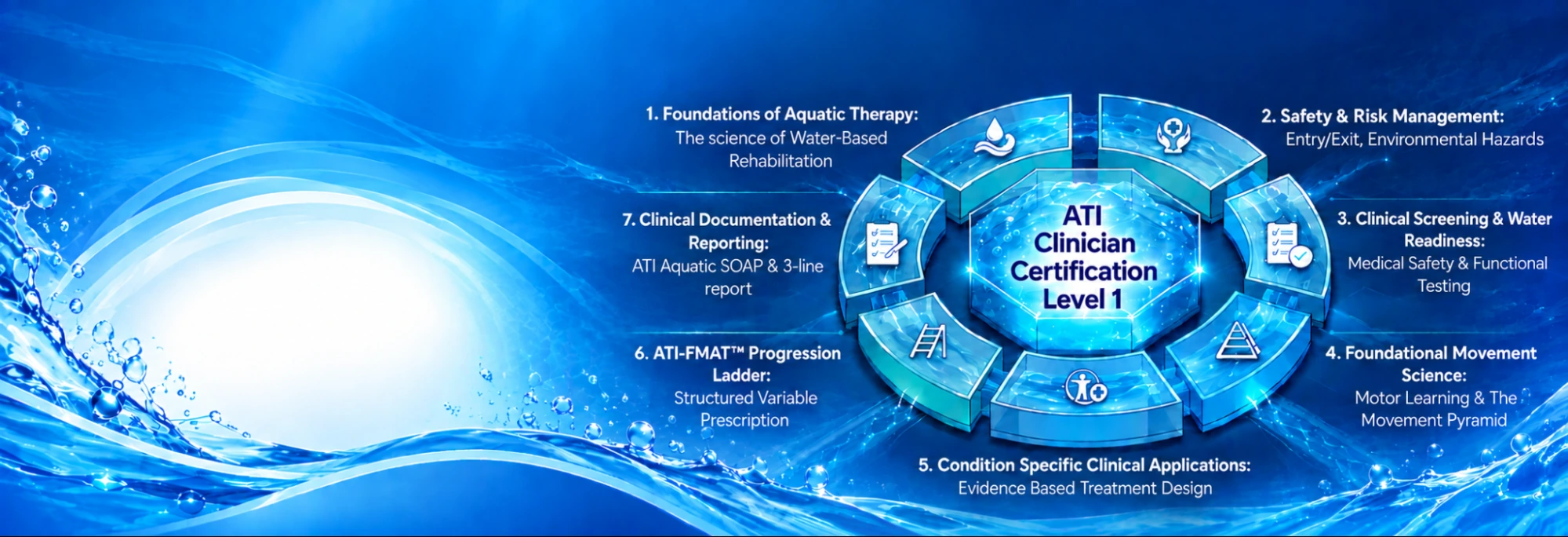
The course runs just over nine hours, structured across seven chapters, each with its own objectives, deliverables, and a quiz before you move forward. Nothing is skimmed.
Foundational principles, the therapeutic role of water, its physical properties, safety considerations, patient screening, and patient suitability, before a single technique is introduced.
Aquatic assessment, clinical reasoning, and treatment progression for the complex cases Level 1 does not prepare you for.
Before certification is issued, you submit video of yourself working with a real patient in the water. This is reviewed and credited individually.
The single biggest barrier to aquatic therapy education was never the content. It was the logistics, flying somewhere, taking days off, finding coverage for your patients while you were on training.
The entire course is delivered online, on your own schedule, from wherever you already are.
The program is approved for continuing education credit in several US states, with more being added as the work continues.
The concept did not come from a textbook. It came from the combined forty years that Karen Snyder and Irene Hammerich spent working in the aquatic environment. Karen founded the Canadian Red Cross Adapted Aquatics Program in 1981. Irene's career began as a teenager teaching swimming, growing through her role as a Master Trainer for instructors and into senior aquatic leadership positions.
That depth of hands-on experience did not stay in the past. It became the daily working framework LiquidGym Therapy and Training Centre's physical therapists used daily, refined session by session as patients responded, progressed, and revealed what actually worked in the water. Years of observation, adjustment, and outcomes shaped the curriculum long before it was ever formalized, and that same clinical foundation is what now underpins the ATI Clinician Training Program, translating 12 years of hands-on expertise into a structured, teachable framework for clinicians entering the field.
This curriculum is the result of more than 12 years of research, development, clinical refinement, and collaboration. It has been shaped by the collective expertise of multiple experienced therapists who have worked together to develop, evaluate, and continuously improve the program. The result is a comprehensive, evidence-informed training program designed to provide consistent, practical, and clinically relevant education for aquatic therapy professionals.
Every module in this certification is developed under senior clinical oversight. The team upholds the clinical standards across the entire ATI education and certification ecosystem.
Level 1 starts at the foundation, the role of water, its properties, safety, and screening, before a single technique is introduced. Nobody is expected to arrive already knowing this.
Aquatic Therapy Innovations Clinical Training Level 1 program has been approved in many US states. Currently we are applying for Aquatic Therapy Innovations Clinical Training Level 2 for CE approval. The certification, the methodology, and the credential are yours either way.
A clinician reviews every submission individually, not against a pass or fail line. If something needs adjustment, you revise and resubmit, not get rejected outright.
Start practicing in the water with a structured method behind every session.
Coming SoonTrain every clinician to one ATI standard, so every patient gets the same quality of care, and your clinic's reputation compounds.
Coming Soon| State | Approved for | Approved by |
|---|---|---|
| California | 9 hours | CEUApproval.com, a recognized approval agency of the Physical Therapy Board of CA — for Physical Therapists and Physical Therapist Assistants in California (CA) |
| Florida | 9 hours | Florida Board of Physical Therapy Practice |
| Louisiana | 9 hours | Louisiana Board of Physical Therapy |
| Minnesota | 7.75 hours | Minnesota Board of Physical Therapy |
| New Jersey | 9 hours | New Jersey Board of Physical Therapy Examiners |
| New York | 10.8 hours | APTA New York |
| Nevada | 9 hours | Nevada Physical Therapy Board |
| Ohio | 9 hours | Ohio Physical Therapy Association |
| Oklahoma | 9 hours | Oklahoma Board of Medical Licensure and Supervision – Physical Therapy |
| Tennessee | 9 hours | APTA Tennessee |
| Texas | 9 hours | Texas Physical Therapy Association |
| West Virginia | 9 hours | West Virginia Board of Physical Therapy |
Courses approved by other state boards in the following jurisdictions are likely accepted for licensure credit based on the state regulation:
AL | AK | AR | CO | CT | DE | GA | HI | ID | IN | IA | KS | KY | ME | MA | MI | MO | MT | NE | NH | NC | ND | OR | PA | RI | SC | SD | UT | VT | VA | VI | WA | WI | WY
Courses approved by other APTA chapters in the following jurisdictions are likely accepted for licensure credit based on the state regulation:
AZ | DC | MD | MS | NM
Please reach out to your state licensing board to confirm the currency and accuracy of this information. If you have a specific question about CEU approval for this course in your state, please direct your inquiry to [email protected].
The following states are not pre-approved: IL
Participants licensed in states not pre-approved may file for individual approval using the instructions on this document.